

Click HERE to visit the Little Miracles website and sign up for our mailing list! We'll keep you informed of everything from product recalls to contest giveaways!
Showing posts with label advice. Show all posts

Friday, April 1, 2011

FDA advisers want more study of food dye-ADHD link

from CNN

FDA advisers want more study of food dye-ADHD link

A Food and Drug Administration advisory committee decided Thursday there is insufficient evidence to support a link between artificial dyes in foods and children with ADHD.  The committee will make no recommendation to ban or regulate dye additives found in food products. But the committee did stress that there seems to be a trend with artificial dyes and side effects in children and that more research is needed.

Over the past two days the committee has heard testimony on dyes and how they cause some children to show signs of hyperactivity.  The question before the committee: Is there enough evidence to connect artificial dyes and hyperactivity and, if so, should it recommend that the FDA strengthen its regulations on these ingredients?  The committee's response seems to be  "Not now."

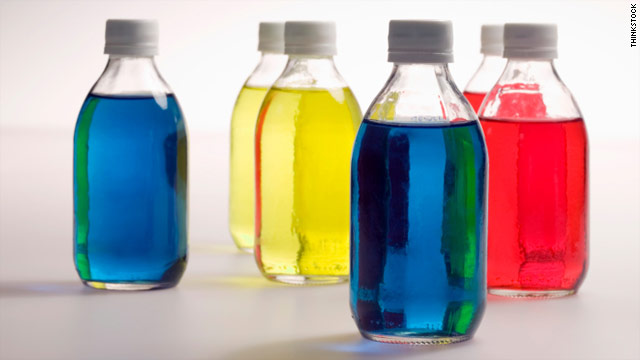
According to the experts who testified, European companies already are dropping dyes including Blue #1, Yellow #5 and #6 and others and substituting natural colorings  for them. But the United States still allows artificial dyes, mostly for aesthetic reasons, not for taste, the experts say.

There are eight dyes now being used in the United States; Citrus Red 2, Red 3, Red 40, Blue 1 & 2, Green 3 and Yellow 5 & 6. They can be found in numerous food products from packaged macaroni and cheese to Easter candy.

Critics had called for either a ban or more explicit labeling. “Why are these dyes in these foods anyway?” asked Michael Jacobsen, executive director of the Center for Science and the Public Interest, a watchdog group on nutrition and food safety. “I would push for having them taken out completely. But if that can’t be done, why not warn the public and parents that these dyes could have some effects?”

The idea that dyes in food causes ADHD was first noted in "Why Your Child is Hyperactive," a book written by Dr. Benjamin Feingold in 1975. The eating style described in the book became known as the Feingold Diet. He found if you eliminated artificial food dyes and additives in American diets, cases of hyperactivity in children, later defined as ADHD, would decline. But reviews of the data found that the correlation between dyes and hyperactivity were inconsistent.

Although numerous data have been collected on food dyes and hyperactivity in kids during the past decade, critics say the design of the studies has been weak. They note many of the studies were performed on small groups– many involved no more than 25 children. They also noted that much of the observation data (how the child acted) was reported by parents and not by clinicians. And they pointed out that most of the dyes tested were combined into a dye mixture and not tested individually.

The most recent studies to bring food dyes and ADHD back to the public eye was a 2007 project conducted by researchers at the University of Southampton in the United Kingdom. It showed that artificial food dyes along with sodium benzoate (a white crystalline salt used as a food preservative) increased ADHD symptoms in both hyperactive and non-hyperactive children. That study was followed up by another paper in 2010 by the same researchers who looked at the connection between food dyes, ADHD and histamine, a chemical that’s produced in the brain when the body is having an allergic reaction.

“We found mixtures of certain artificial colors together with sodium benzoate preservative in the diet increased the average level of hyperactivity in 3 and 8/9 year old children in the general population,” Dr. Jim Stevenson, a professor at the School of Psychology at the University of Southampton, and lead author of the study, testified Wednesday.

During the hearing, parents from all over the United States shared stories about their children with the committee. Renee Shutters, from Jamestown, New York, said her 5-year-old ,Trenton, who at the time was in preschool, was an unhappy child. “He just wasn’t comfortable with himself,” said Shutters. But after talking to another parent who said her child was having behavioral issues because he was allergic to a food dye, Shutters took action. “I went through my pantry and removed everything with dyes," declared Shutters.
“Now,” Shutters says, “Trenton is fine. After two days there was a huge change. Two weeks later he felt different, much happier and six weeks later, he was a new child.”

“To give my child an artificial dye would be child abuse!” exclaimed Maureen Lamm, a doctor and mother of three from Kennesaw, Georgia, a suburb of Atlanta. “He suffers that much when he eats foods with certain dyes.” Lamm has become so involved she offers a website, www.momsabcs.com, to parents to warn them about dye allergies.

But the FDA’s evaluation of studies on color additives and ADHD found there was very little strong evidence in any of these studies that showed dyes were the primary reason for a child’s hyperactivity.

“There were other factors in most of these studies that could have been the reason or could have gone hand in hand with the dyes to create these problems in these particular children, including preservatives,”said Jason August with the FDA’s Office of Food Additive Safety.

And the International Food Information Council, which is supported primarily by broad-based food, beverage and agricultural industries, says the science isn’t there.

“Without sufficient scientific evidence that a causal link truly exists between food colors and hyperactivity in children, communications that suggest a link could have unintended consequences, including unnecessarily frightening consumers about safe ingredients that are consumed every day,” said David Schmidt, president and CEO of IFIC.

After lengthy discussion the committee made its decision based on the FDA’s evaluation of study data, as well as testimony from researchers. It was the weakness of the studies, and the lack of data, that caused the committee to ask for more research and delay action on artificial dyes.

Although the committee only makes recommendations to the FDA, the agency usually follows those recommendations.

Wednesday, February 2, 2011

Toxic Baby Products?

from Babies 411

“Toxic baby products?” “How’s that possible?” “I’ve been using what on babies?”


This was my reaction when I was researching baby products (during the development phase of Babies 411) and found out the news that most of the baby products that we know, love, and have used for years contain cancer-causing (carcinogenic) chemicals. What an eye opener.


As a NICU nurse, I care for babies that are compromised and are in their most vulnerable state. Now I find out that I have been unknowingly using and recommending unsafe products. Well, no more. I have taken a stand and made it a mission to educate mothers, caregivers and most of all healthcare professionals on the dangers lurking within our trusted baby shampoos, washes, lotions, wipes and more.


As a healthcare professional, I know that parents are looking to us for the answers. And because of this, parents choose and purchase products that we use in the hospitals believing that this is the safest options. Why wouldn’t it be if we use them in the hospitals? Unfortunately, we are unknowingly and unintentionally promoting bad products.


Want to know how to protect your baby from these toxic products? Here are a few recommendations:


1. Knowledge is power so do your research! Read labels and avoid those products that contain harmful ingredients. Learn more by reading our article “Protecting our Babies from Toxic Chemicals”.
2. Less is more. Be sparing on products that you use on your baby.
3. How safe is your baby products? Check out Skin Deep to learn more about the products you are putting on your baby.
4. Keep up-to-date on news surrounding chemicals in baby products (not just skin care products, but also chemicals found in toys, clothing, food, plastics and other baby products).
5. Love disposable baby wipes but want to avoid the chemicals? Make your own wipes. Want to learn how? Read our article Making Homemade Baby Wipes for the easy, breezy recipe.
6. Are you expecting a baby? Ask your hospital or childbirth facility what baby products they use on babies. If it’s not a safe choice, bring your own and make your baby’s first bath a healthy, toxin-free bath.
7. Help us spread the word. We are working hard with our favorite company, Earth Mama Angel Baby, trying to educate healthcare facilities on the dangers of toxic baby products and looking to phase these products out of our hospital systems. With your help, we could move mountains! Contact your maternity unit and express your concerns.

Wednesday, June 23, 2010

What is the Hardest Part of Being a New Mother?

from momversation.com, by Sarah Lavery


Sure, there are countless moments every day when I cherish Adelyn’s tininess, her helplessness and her irreplaceable need for me. I can’t help but think it, though. This part right here, this true infancy part, this is just me doing everything in my power to make sure she survives the day.

I should do tummy-time more, but I can’t take the crying. I should be reading to her more, but on the nights where she’s inconsolably cranky I just want her to finally fall asleep. I should be, by now, able to figure out what’s wrong at the first cry, because some moms can do this you know!  I’ve seen it. I’ve seen them soothe a baby in six seconds and laugh while they wipe throw-up out of their hair.

When Adelyn is awake and she's fed and in a good mood, my world is joyous and my spirit is high. That’s all it takes. Those moments make you forget the rest.

But I’m truly counting down the days when I can be a creative mother, not just one who feeds, burps and rocks. I want to teach her things. I want to listen to her ask questions and answer brilliantly.

Adelyn is napping in her swing, going on an hour and a half. About twenty minutes ago I tip-toed into the living room to grab a phone number I’d left on the coffee table and just the sound of the piece of paper rustling against my fingers woke her. Great, she spent all yesterday not napping and being terribly unhappy.

And if she doesn’t get a good hour and a half nap this morning I’m in for a repeat. I stood still for a moment, out of her eyesight (if she sees me the nap is done for, she starts squuueeee!-ing instantly).

But then Addy just reached her little hand up and scratched a spot on her head. She did it again. Then a third time, and she turned her head to the side and fell back asleep.

I cannot explain how remarkable it was to witness that. It was the first time I’ve seen my daughter react to something that was irking her by fixing it herself. Her head itched so she scratched it. It still itched so she scratched some more.

This is what I’m excited for, teaching her how to fix these little things. It might be getting easier, this mothering stuff. Or maybe I, too, am learning all my lessons.

Wednesday, June 9, 2010

20 Best-Ever Potty Training Tips (from real moms)

from Parents.com

girl on potty training toilet

Are you counting down the days to the toilet transition? Or maybe you've already dabbled in a few less-than-successful attempts? Either way, we heard one thing again and again: Your kid has to be good and ready. And don't worry, he will be someday. "No child is going to graduate high school in diapers," says Carol Stevenson, a mom of three from Stevenson Ranch, California, who trained each one at a different age. "But it's so easy to get hung up and worried that your child's a certain age and not there yet, which adds so much pressure and turns it into a battle." Once you're convinced your kid's ready to ditch the diapers (watch for signs like showing an interest in the bathroom, telling you when she has to go, or wanting to be changed promptly after pooping), try any of these tricks to make it easier.

All About the Bribes
Two words: Mini M&M's! Promise that each time your kid goes potty, she gets two or three, but if she wipes herself (a huge challenge for us) then she gets four or five. This makes a big difference since I think one of the reasons kids don't like to go is because the business of learning to wipe is kind of yucky.
-- Donna Johnson; Charlotte, North Carolina
I wholeheartedly recommend bribery as potty training motivation: We kept a small plastic piggy bank in the bathroom and rewarded every success (one penny for pee, two for poop). Our daughter was entranced -- she would shake the piggy with a gleam in her eye and remark how heavy it was getting. When she was all done, we took her potty windfall and turned it into quarters to spend on rides at the mall.
-- Lisa Spicer; Los Angeles, California


Daddy Does It
After a couple of failed attempts, I tried a new technique while Mom was away on a well-deserved weekend with her friends. We covered the couch and chairs with plastic and bought "manly-man" underwear -- just like Dad's. We spent the weekend in underwear and T-shirts, making a game every hour or so to see who could go to the restroom. There were very few accidents and just blocking out a weekend made for very little stress. It's still one of my favorite memories.
-- Scott Smith; Mount Washington, Kentucky


Target Practice
Getting my son to learn the standing-up thing was hard, so we turned it into a game. I put five Cheerios in the potty and told him to aim at them when he peed. Every time he did it right, he got to pick out a prize from a bag of goodies I picked up at the dollar store. -- Erika Cosentino; Lawrenceville, New Jersey


Heap on the Praise
I've heard all the tricks -- stickers, bribing with toys, special underpants. But you have to pick something that's consistent with your parenting style. I didn't use rewards elsewhere, so I didn't want to start here. What did work: Lots of undivided attention, positive reinforcement, love, affection and pride when my kids were successful. Making a big deal about small steps of progress is key.
-- Diane Hund; Elmhurst, Illinois


I didn't use any special stuff -- no kiddie toilets, potty rings, or even pull-ups -- because the local YMCA where my daughters attended didn't believe in them. We even had to sign a contract stating that we'd follow their potty training policy at home. I was instructed to just put the kids (they were around 2 1/2) on our regular toilet throughout the day when I thought they had to go. After a week and lots of "Yeah! You did number two!" and "Good for you! You made a wee-wee!" they were done, with barely any accidents. All told, I think they were just developmentally ready.
-- Sandra Gordon; Weston, Connecticut


Little White Lies
My middle son was stubborn when it came to #2 on the potty -- absolutely refused, no matter the reward. So I finally told him that when we flush, the poop goes out to the sea to feed the fish -- so if he didn't go, then the poor little fish wouldn't have anything to eat. My son, being the compassionate, sensitive little do-gooder he is, felt it was his mission to poop to "save" the fish. (After all, Nemo and Dory were counting on him!)
-- Liane Worthington; Simpson, Pennsylvania


What's the Frequency?
I wish I could take credit for his training, but the amazing teachers at his daycare did the hard stuff: Putting him on the toilet every 20 minutes, without fail. We just followed their lead at home. And I think the fact that he saw his classmates going on the potty made him want to also.
-- Roberta Perry; Phoenixville, Pennsylvania


We found that our son simply was not interested in remembering to go on his own, so we found the Potty Watch, which he loved. You program this wrist watch to play songs and light up at 30-, 60-, or 90-minute intervals; then it resets itself and starts the countdown all over again.
-- Heather Ledeboer; Athol, Idaho


The Naked Truth
Once my kids were interested in the potty concept -- around 2 to 2 1/2 -- we let them run around naked before bathtime and encouraged them to use the potty. Then I let them go sans pants at home for extended periods of time (they did really well remembering to go as long as they didn't have any clothes on). After they mastered naked-potty use, we worked our way up to clothes (first just underwear, then eventually pants). This method was extremely painless -- very few accidents or setbacks.
-- Jennifer Walker; Cleveland, Ohio


Figuring Out the Fear
Our first son began peeing on the potty at 18 months, but he was scared to do "the other." After offering many rewards and becoming very frustrated, we turned to the doctor, who explained that some children view bowel movements as a literal part of themselves and are afraid to watch them flush away. (This made so much sense because he was a very analytical child.) After showing him a children's anatomy book and explaining how the digestive system worked, he started going #2 the very next day!
-- Ginny Graham; Collegeville, Pennsylvania


Sticker Shock
Every time each of our toddlers used the potty, I decorated their outfits with stickers. At the end of the day they showed off their rows of stickers (which looked like an army general's stars) to their father. So they got double the praise for their potty training successes, and I got an inexpensive and easy way to reward them.
-- Jen Singer; Kinnelon, New Jersey


Patience Is a Virtue
When I thought my daughter was ready (around 26 months), we went to the toilet every 10 minutes -- even if we were out. We slowly worked up to 15 minutes, 20 minutes, etc., and after a day or two, she could pee on her own. Poop was a different story -- I had to goad her with M&M's!
-- Elissa Murnick; Fairfield, Connecticut


My son mastered peeing on the potty pretty quickly, but nailing #2 took some extra effort. At first we had to watch for his "cues" to tell he was trying to go poop and then bring him to the bathroom. Because it took a while (sometimes more than a half-hour) we started reading to him to make the wait more fun. But above all else, patience, patience, patience is the key!
-- Karen J. Wright; Mankato, Minnesota


Find the Right Bribe
We tried Cheerios, M&M's, potty charts, cheerleader rants and screams, but nothing worked. My son has always been obsessed with cars and trucks and luckily, the movie Cars had just come out. My husband scoured the local stores to collect all the figurines featured in the movie. We saw the movie, then we told my son that every time he went potty he'd get a car. It was magical. After 15 cars, he was totally potty trained. I'm sure Disney would be so proud.
-- Darlene Fiske; Austin, Texas


Go for Broke
Just go cold turkey. My 2-year-old seemed ready for potty training but none of the "tricks" were working. We picked a Saturday, put him in big-boy underwear and braced ourselves. He went in his pants four or five times within the first hour; we kept changing him and telling him that he needed to use the potty instead. After a really long day, he got the hang of it and was all potty trained by Monday. He still had the occasional accident, but making the switch once and for all really seemed to work.
-- Pamela Scott; York, Pennsylvania


Location, Location, Location
We found that the kiddie lids that go on top of the toilet were too intimidating to use right away. (Plus, since they usually need a step stool, it can take too long for children to reach the toilet in time.) So I started my 2-year-old daughter with a mini-Elmo potty seat, which we kept in the living room, since she spent the most time there. We gradually moved it closer and closer to the bathroom, and eventually worked our way up to a Dora seat that went right on top of the toilet.
-- Tracy Burton; Grand Ledge, Michigan


On the Road
My daughter was terrified of the automatic flushers in public restrooms, so I started doing this trick. Put a Post-It note over the sensor and it will prevent the toilet from auto-flushing. After she's all done, wiped, and left the stall, you can remove the paper to let the toilet flush.
-- Tracy Marines; Lancaster, Pennsylvania


We travel with a small toilet with a removable seat to help my daughter feel more comfortable on the "scary" big potties in public restrooms.
-- Christine Louise Hohlbaum; Paunzhausen, Germany

Followers

Search This Blog

  © Blogger templates 'Sunshine' by Ourblogtemplates.com 2008

Back to TOP