
Click HERE to visit the Little Miracles website and sign up for our mailing list! We'll keep you informed of everything from product recalls to contest giveaways!

Monday, August 16, 2010

Organically Raised – Conscious Cooking for Babies and Toddlers

from Nature Moms Blog


Ever tried the little jars of baby food from the store? Yuck! Even before I knew much about whole foods I knew that those little jars were nasty. Not only do they taste quite bad IMO and not at all like the like real foods they are imitating, they are not fresh foods and they are packed with preservatives usually. From the beginning of my career as a mom I bypassed those jars as much as possible and opted to feed my babes what the rest of us were eating… pureed of course. I have a video of my youngest eating his first real meal at about 8 months old (breastfed before that). He devoured a puree of 13 bean stew… and I mean devoured. On the video he is trying to dive into the crock pot and he screams when the food is out of his reach. This is significant because this was just after my cancer diagnosis and my release from the hospital. My family was taking care of the little guy while I couldn’t and the breast milk bank was now permanently closed. They tried to feed him some store bought baby food and he did NOT like it. But the 13 bean stew? The boy was screaming (literally) for whole foods.

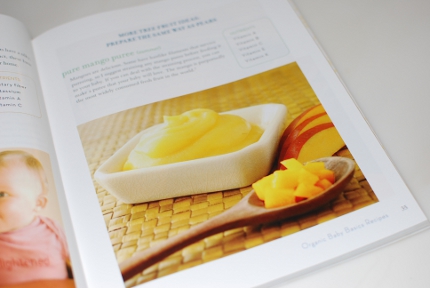
Recently I was sent a copy of the book Organically Raised – Conscious Cooking for Babies and Toddlers and I can’t say enough good things about it. Not only is it a beautiful book with tons of gorgeous pictures that had me drooling for baby and toddler food… the concept is so important for parents of young ones to grasp. Chemical laden baby food from jars is not really easier and more convenient than making wholesome organic, baby food yourself from whole foods. In my experience the opposite is true. I also believe that the BEST way to get your kids eating healthy whole foods, and tons of fruits and veggies as kids is to start by feeding them these foods as a baby in the freshest forms available. Is it any coincidence that my kids all ate REAL food as babes and that I now have zero problems in the getting kids to eat veggies department? I don’t think so. We went to a buffet recently and attracted much attention when my kids filled their own plates with broccoli, green beans, peas, mushrooms, and various fruits. Around me I saw several kids eating Jello and drumsticks for dinner… nuff said.
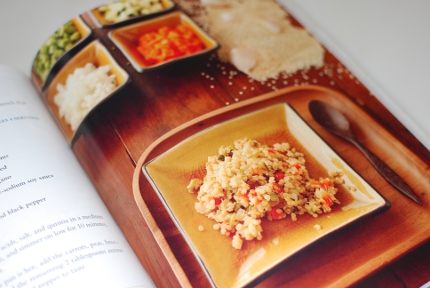


Also because they are so little and vulnerable, they benefit greatly from organic foods. They don’t need any more chemical exposure than they already get from their environment. This book gives lots of advice for feeding kids consciously with many delicious recipes. The toddler food is also great for encouraging adventurous eating. Greek falafel bites with cucumber-dill dipping sauce and quinoa primavera are healthy foods sure enough but they are also FAR from what kids who eat the SAD (Standard American Diet) are used to and that is a very good thing. Kids who are exposed to many different and unique foods as children will try more foods overall and have a more diverse diet as adults. That is code for saying they won’t be picky eaters. We all know those picky adult eaters don’t we? The ones who think anything but meat and potatoes is exotic and foreign.

I can’t wait to make some of these tasty toddler dishes for my youngest and thankfully there were lots of non meat recipes in the book because the boy isn’t big on eating things with faces. I know we will all love the food and I especially loved reading the book. The pictures alone made me sad that my young kiddo days are almost gone. If you are prone to baby fever you may not want to read it… the pictures of the babies and toddlers are just as delicious as the food ones.

This is THE cookbook for parents who want to feed their babies and toddlers organic, real, nourishing, whole foods. Thank you Anni Daulter for an amazing book!

Thursday, August 12, 2010

New Britax Convertible Car Seats Coming Soon


I had the privilege of receiving one of these brand new, redesigned (not in stores yet) Boulevard Britax car seats to test out.  I have used two of Britax's seats so far with my own child -- the infant Chaperone seat and the convertible Diplomat seat.  I may have had a few suggestions for improvements on both of those seats, but this newly remodeled Boulevard stands alone as a seat of perfection.  Britax's focus on safety is incomparable with any other car seat manufacturer.  But besides the fact that their car seats are possibly the safest car seats out there, they are also brilliantly designed for ease of use for the parent and comfort for the child.  I can't say enough about Britax right now and what great new products they are putting out there.  If you haven't checked out their awesome new single and double B-Ready stroller, check it out too!

There are many great reviews out there already on these newly redesigned Boulevard and Marathon seats, but here's my favorite from Spilling the Beans:

from Spilling the Beans

Britax is a company that is totally obsessed with car seat safety. A few years ago, research started coming out that revealed head injury to be the leading cause of death for children in automobile accidents. Britax took a good look at those findings and then took their existing line of car seats to the crash test lab, wondering if they were doing enough to protect kids’ heads. While all the older seats already exceeded the federal standards for head excursion, the Britax engineers still thought they could do better.


After many hours at the drawing board, the results are really impressive. The new seats look better and perform better than their predecessors. They offer better features and higher weight limits but (surprisingly) there will be no price increase.

Here are some of the highlights:

~ New contours - the shape of the new car seats is really different. The center of gravity is lower, to create a downward rocking motion in a crash, instead of a forward thrust. The shell is more enclosed and protective.

~ Steel reinforcements - the new models have steel bars running down both sides of the seat for extra strength.

~ Crumple zones - Britax has introduced a new SafeCell technology - a honeycomb-shaped plastic zone at the base of the car seat that’s designed to crumple, absorbing and dissipating the impact from a crash.

~ Foam galore - the sidewalls of the new seats are fully lined with energy-absorbant EPP foam.

~ Versa-Tether - it’s not a new feature, but now’s a good time to point out the thought behind the design of this safety feature. The webbing is sewn so that , in a crash, it releases its seams in stages, slowing the forward motion.

~ Easy to clean - the new seats (except the Roundabout 55) have an Easy-Remove cover that comes right off without having to uninstall the car seat - so you can dread those spills just a little less from now on.

~ Quick adjusting - all the new models (except the Roundabout 55) have a quick-adjust harness, which allows you to change the height of the harness straps without needing to rethread the straps.

~ No Slip - there’s a rubberized strip on the base of the car seat, which prevents it from slipping around - a small but very nice touch.

~ Simplified LATCH - the LATCH connectors are now “one handed” meaning they’ll work fine in either position, so you don’t need to switch them around when moving from rear- to forward-facing.

~ Improved lock-offs and belt path - the location of the built-in seatbelt lockoffs has been moved to the center of the seat, and the belt path is more open, so you can comfortably pass through the seatbelt and lock it off even if you’re standing outside the car.


Take a look at the full line of next-generation Britax seats for 2010 and pre-order now.

Tuesday, August 10, 2010

Safe school supplies 2010

from greener, healthier living

It’s back-to-school time again! Time to shop for those school supplies and of course you want them to be safe from ickies like PVC. Kids are going to be using school supplies and lunch boxes on a daily basis and kids are more greatly affected by toxins than adults. So we want to make sure we are sending them off with items that are safe.


So, what should you all avoid this back-to-school season?

1. PVC – polyvinyl chloride. PVC causes cancer, and is notorious for containing lead which can cause irreversible brain damage with too much exposure.

How to avoid PVC, the poison plastic. The CHEJ gives these quick tips:

PVC products are often labeled with the words “vinyl” on the packaging, such as vinyl 3-ring binders

PVC packaging can be identified by looking for the number “3” inside, or the letters “V” or “PVC” underneath, the universal recycling symbol, indicating the product is made out of PVC. Just remember – bad news comes in #3’s, don’t buy PVC

Some products are not properly labeled, making it tough to determine whether they contain PVC. If you’re uncertain, e-mail or call the 1-800 number of the manufacturer or retailer and ask what type of plastic their product is made of. You have a right to know.

While sadly, some safer school supplies are harder to find, if you keep looking, you should still be able to find PVC free supplies. Here is a pocket guide to help you along and a full list of PVC-free school supplies. Though, for many of these supplies on the full list, you will have to do your shopping online and those sites are noted on CHEJ’s guide, which is certainly more appealing to me than battling the back-to-school crowds in stores. Luckily, I have 1 more year before I need to worry about that.


Some of my favorite PVC-free items for back to school are:

Fleurville backpacks I love the designs!

Crocodile Creek lunch box I am not kidding when I saw these are stinkin’ cute and I want one for myself!

Kids Konserve Waste Free Lunch System for something more sophisticated. Comes complete with 2 stainless steel food containers, a napkin, sandwich wrap, stainless steel water bottle and a nice recycled cotton sack to carry it all in. There is also a nice thermos for sending soups or other warm items and an ice pack for helping keep things cool.

Affordable, iPlay raincoats

So, where can you find PVC-free school supplies? If you are like me and prefer not to battle the last minute back-to-school shoppers, check out the eco-friendly selection at Amazon for

Binders

Bags, backpacks and notebook protectors

Writing instruments and crafts

Or consult CHEJ’s well researched list with websites of manufacturers and how to buy.


2. BPA – bisphenol A. Common in Polycarbonate (PC) #7 plastic. A hormone disruptor that interferes with the developing breast and prostate in the womb and out, as well as affecting brain development and behavior. Has also in recent studies been linked to cancer, heart disease and diabetes.

See my BPA-free list here to find BPA-free water bottles, dishes, snack bowls, etc. or shop at The Soft Landing.


3. Polystyrene #6 plastic. Styrene can cause nerve system damage and is listed as a probable human carcinogen (causes cancer). Commonly found in Styrofoam containers, as well as other food containers, cups, cutlery, CD’s, packing peanuts, etc.


4. Alcohol-based hand sanitizer. Kids and alcohol just don’t mix, so opt for something safer such as CleanWell Hand Sanitizer.

5. Triclosan and items labeled with “Microban Technology.” Triclosan is the common ingredient in many antibacterial products, including most liquid hand soaps, and is toxic. Really anything labeled antimicrobial, antibacterial, keeps food fresh longer, and other such claims could contain Triclosan. Avoid it. SafeMama has a good article on Microban and I agree with their stance that it seems unnecessary and because there is not sufficient evidence one way or another, it’s best to steer clear if possible. I make my own foaming hand soap and love it!


Does your school make the environmental health grade? Use the CHEJ’s environmental checklist to find out.


That should you do if your school list has items on it that you feel strongly against (i.e. alchohol based hand sanitizer like Purell)? Tiffany at Nature Mom’s Blog did a write up last year with a letter she sent to her son’s teacher explaining some of the deviations she provided from the required list.

Hope these tips make your back to school year a little healthier! Happy shopping!

Monday, August 9, 2010

Pesticides and ADHD


 By Dr. Austin Abramson

Pesticides are chemical substances used to prevent crop destruction by insects. They have positive effects by decreasing crop losses and increased food per acre farmed. However, they may come with a steep cost to your health. Pesticides are powerful substances that are absorbed or ingested and may cause potential harm especially to infants and children, who eat more fruits and vegetables than adults relative to their body weight and who are still developing.

Additionally children play more on the ground where they have the greater potential to come in contact with pesticide residues. Children also may place contaminated hands and objects in their mouths.
Fruits and vegetables contribute essential nutrients, including fiber to the diet. However, it is very important that parents understand that certain fruits and vegetables named the “Dirty Dozen” may have a greater risk of pesticide contamination than other varieties due to the nature of the plant and how they are grown. This list includes:

•Celery
•Peaches
•Strawberries
•Apples
•Blueberries
•Nectarines
•Sweet Bell Peppers
•Spinach
•Cherries
•Potatoes
•Grapes
•Lettuce


A recent study from Harvard in the journal of Pediatrics1 examined the association between ADHD and urine metabolites of organophosphates. Organophosphates are a common pesticide spayed on fruits and vegetables. The conclusion of the article was that children with higher levels of organophosphate metabolites in the urine were more likely to be diagnosed with ADHD.since high levels of organophosphates are purported to disrupt brain neurotransmitters More research is needed to study the effects of diet on conditions such as ADHD.

The obvious and simple solution is to avoid pesticides and all chemical agents in the food supply wherever possible. Washing fruits and vegetables may not always be sufficient. Therefore, organic foods, including fruits and vegetables that are made without the use of these pesticides may be one way to help protect our families.

Wednesday, August 4, 2010

Concerned About BPA? Check Your Receipts!

There's been a lot of talk about BPA in cash register receipts lately, and lots of articles stating the dangers from these new findings.  I for one know I won't be letting my son hold the receipt as we leave the store anymore!  I've posted a few more links to other articles on this subject at the end of this article.

From Science News

By Janet Raloff

What's the charge?

Some — but not all — cash-register and credit-card receipts can be rich sources of exposure to BPA, a hormone-mimicking pollutant.Christopher BakerWhile working at Polaroid Corp. for more than a decade, John C. Warner learned about the chemistry behind some carbonless copy papers (now used for most credit card receipts) and the thermal imaging papers that are spit out by most modern cash registers. Both relied on bisphenol-A.

Manufacturers would coat a powdery layer of this BPA onto one side of a piece of paper together with an invisible ink, he says. “Later, when you applied pressure or heat, they would merge together and you’d get color.”
At the time, back in the ‘90s, he thought little about the technology other than it was clever. But when BPA exploded into the news, about a decade ago, Warner began to develop some doubts.

Research was demonstrating that this estrogen-mimicking chemical was leaching out of polycarbonate plastics, out of the resins used to line most food cans and out of dental sealants. In the womb, this chemical could disrupt the normal development of a rodent’s gonads — or evoke changes that predisposed animals to later develop cancer.

Warner recalls that these reports piqued his curiosity about whether the color-changing papers that were increasingly proliferating throughout urban commerce still used BPA.

By this time, the organic chemist was teaching green chemistry at the University of Massachusetts. “So I'd send my students out to local stores to get their cash register receipts.” Back in the lab, they’d dissolve the paper, run it through a mass spectrometer and look for a telltale spike in the readout that signaled the presence of BPA.

And they’d find it, Warner says. Not in every receipt. But in plenty. And the paper used in the receipts that contained BPA looked no different than papers that didn’t.

But that was then, before he co-founded the Warner Babcock Institute for Green Chemistry, an organization that works with industry to develop safer products and production processes. So earlier this week I asked Warner whether he had evidence BPA might still be present in those papers. Yep. He turned up BPA-based receipts in use the last time he looked. Which was last month.

And the amount receipts carry isn’t trivial.

“When people talk about polycarbonate bottles, they talk about nanogram quantities of BPA [leaching out],” Warner observes. “The average cash register receipt that's out there and uses the BPA technology will have 60 to 100 milligrams of free BPA.” By free, he explains, it’s not bound into a polymer, like the BPA in polycarbonates. It’s just the individual molecules loose and ready for uptake.

As such, he argues, when it comes to BPA in the urban environment, “the biggest exposures, in my opinion, will be these cash register receipts.” Once on the fingers, BPA can be transferred to foods. And keep in mind, he adds, some hormones — like estrogen in certain birth-control formulations — are delivered through the skin by controlled-release patches. So, he argues, estrogen mimics like BPA might similarly enter the skin.

Maybe, maybe not. BPA and real estrogen don’t have the same structure, so their permeability might vary. Moreover, there are all kinds of materials in the skin that might selectively degrade or alter this hormone imposter as it passes through.

More importantly, I asked: Have you published your data? “No,” Warner says, “that’s not my goal.” His research organization “is dedicated to not preaching about the bad but about diligently trying to invent the good,” he says. Moreover, he says he lacks the resources to do a thorough job of quantifying the prevalence of BPA-laced receipts.

Perhaps. But for his research to have an impact, it must pass peer review and appear in journals that can be cited. His analytical techniques need to be articulated so that others can try to replicate his findings or shoot them down. And somebody has to go the distance and investigate how much BPA can rub off onto fingers from receipt papers, does it get through the skin — and if it does, how much gets into the circulation, where it can reach organs throughout the body?

Warner, a patent-toting inventor, has set his sights on developing some new analog to the old litmus test. He envisions something that could be rubbed across a receipt, or perhaps the fingers; when it sensed the presence of BPA it would change color.

Of course, a simpler caveat-emptor approach would be to just mandate labeling of any and all products that contain BPA at their point of sale — or in the case of receipts, at the cash register. At least pregnant women would know to wash their hands after picking up a BPA-laced receipt. And we’d all know to keep such paper out of hands of kids. We might also want to store those receipts in some zip-it-closed plastic baggie, not our wallets.

Greenpacks article

Denver Examiner

USA Today

AOL News

Environmental Working Group

Tips to reduce exposures to BPA in receipts


•Minimize receipt collection by declining receipts at gas pumps, ATMs and other machines when possible.

•Store receipts separately in an envelope in a wallet or purse.

•Never give a child a receipt to hold or play with.

•After handling a receipt, wash hands before preparing and eating food (a universally recommended practice even for those who have not handled receipts).

•Do not use alcohol-based hand cleaners after handling receipts. A recent study showed that these products can increase the skin's BPA absorption (Biedermann 2010).

•Take advantage of store services that email or archive paperless purchase records.

•Do not recycle receipts and other thermal paper. BPA residues from receipts will contaminate recycled paper.

•If you are unsure, check whether paper is thermally treated by rubbing it with a coin. Thermal paper discolors with the friction; conventional paper does not.

Monday, August 2, 2010

Little Miracles Baby Planning on Charlotte FOX News!

Check us out in the segment below that aired twice as a top story on FOX NEWS last week here in Charlotte.  We are so excited to be able to help promote a better understanding of the baby planning industry!

http://www.foxcharlotte.com/news/top-stories/Parenting-Trend-Hire-a-Baby-Planner-99600699.html

Little Miracles Extreme Discount Extravaganza!

It's Summer Madness!!


In honor of our one year anniversary we want to say THANK YOU to all the parents and expecting parents out there.


Little Miracles Baby Planning (http://www.littlemiraclesbabyplanning.com/) is offering half off the cost of ALL our services if you contact Little Miracles for a FREE consultation anytime between now and August 31st! We help clients in any city or state with everything from the smallest details (which type of diapers are best?) to the biggest details (how can I find the best nanny for our family?). Everything we do is personalized just for you, and we also pride ourselves in educating our clients along the way (everything from car seat safety to swaddling techniques). Unlike your sister or best friend, we have tried all the products out there and we are not just going to recommend what we like best. We are here to help save you time and money as you prepare for baby's arrival. This special one-time offer of 50% off can't be beat! 


If you are an expecting or adopting parent or know someone who is expecting or adopting, this is the perfect gift idea (**we offer gift certificates!**).


Since baby planning is still a relatively new business, most expecting parents aren't sure what to expect when hiring a baby planner. Like a wedding planner, we are here to help you plan for one of the biggest days of your lives. However, unlike a wedding planner, we are not here to take control of your day or the events leading up to your big day. We are simply here to help as much or as little as you need. Sorting through everything there is to learn and buy when you are becoming a parent (whether for the first or fifth time) can be completely overwhelming. We are here to offer advice when you need it, point out products you may not have seen before, and to be that person who doesn't give you a one-sided opinion on everything. We want the process of preparing for baby's arrival to be as fun and exciting as it should be!


Please feel free to email (abby@littlemiraclesbabyplanning.com) with any questions or for a price quote. I guarantee you will be pleasantly surprised how little it costs to save so much with our help!

Followers

Search This Blog

  © Blogger templates 'Sunshine' by Ourblogtemplates.com 2008

Back to TOP